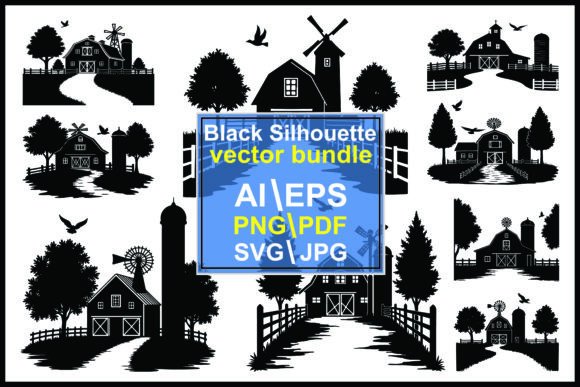
Farmhouse Vector Silhouettes Review
As a designer who spends more time looking at stitch density and fabric grain than I do drinking my morning coffee, I approach every new design asset with a mix of optimism and skepticism. You want something that looks great on the screen but translates cleanly through the needle. That is exactly where Farmhouse Vector Silhouettes enters the conversation. This collection of black silhouette farm scenes—featuring barns, windmills, trees, fields, and rural landscapes—hits a specific aesthetic sweet spot that has been dominating craft fairs and Etsy shops for years. But does it hold up when you are actually stitching it out for a paying client?
I recently put this Illustrations set to the test. My goal was not just to see if the software could read the file, but to evaluate how these Graphics perform as a real-world machine embroidery design. I wanted to know if this embroidery project would stand out in a sea of generic floral patterns or if it would feel dated. Here is my practical breakdown of how Farmhouse Vector Silhouettes performs in actual production environments.
The First Impression: Mood and Visual Personality
When you first load these files into your digitizing software, the immediate takeaway is clarity. Because the source material relies on solid black silhouettes, there is no ambiguity about the shape language. The mood is undeniably rustic, grounded, and nostalgic. It captures the essence of classic country elements without getting bogged down in unnecessary detail. For a craft business, this is crucial. You want designs that communicate their theme instantly.
The visual personality here is bold. Unlike intricate pictorial designs that require high thread counts and complex shading, these silhouettes offer a graphic punch. They feel modern despite their traditional subject matter. This makes them incredibly versatile for custom apparel ranging from baby onesies to heavy-duty workwear. The shapes are clean, which suggests they will digitize well, provided the digitizer understands how to handle negative space effectively.
Real-World Application: From Screen to Stitch
Let’s talk about the meat of the review: how does this look on a finished product? I simulated several scenarios to see where Farmhouse Vector Silhouettes shines.
- Tote Bag Design: This is perhaps the strongest use case. A large barn or windmill silhouette on a canvas tote creates an instant statement piece. The high contrast between the dark thread and the natural canvas mimics the original vector perfectly. It feels like a boutique item rather than a mass-produced souvenir.
- Sweatshirt Embroidery: On a heather grey or cream sweatshirt, these designs offer a subtle yet sophisticated look. The silhouette style works beautifully because it doesn’t overwhelm the texture of the fleece. It adds character without adding bulk, which is key for comfortable everyday wear.
- Baby Embroidery: Small tree or field silhouettes are perfect for nursery decor or baby blankets. The simplicity of the shape is soothing to the eye and safe for delicate fabrics. It avoids the "cluttered" look that can sometimes make children's items feel chaotic.
- Embroidered Patch: If you are creating patches for denim jackets or backpacks, the solid fill nature of these graphics allows for strong border stitches. The clean edges ensure that even after multiple washes, the patch remains legible and intact.
For an Etsy seller or small shop product creator, this versatility is gold. One design file can be adapted for a personalized gift apron, a holiday stocking stuffer, or a wedding favor tag. The design assets provide a foundation that feels professional and cohesive across different product lines.
Where to Exercise Caution
No design is perfect for every situation, and being honest about limitations is part of being a good reviewer. There are specific contexts where Farmhouse Vector Silhouettes requires careful handling.
First, consider hoop size constraints. While these are generally scalable, attempting to shrink a complex landscape scene too small can result in lost details. Tiny trees or distant fences may merge into a blurry blob if the stitch count becomes too dense for the available space. Always check the stitch density before committing to a tiny embroidery file placement.
Second, fabric choice matters immensely. These designs rely on contrast. On dark fabric, you will need a heavy underlay or a light-colored backing stabilizer to prevent show-through. On stretchy knits, the tension must be adjusted carefully; a rigid silhouette might pucker if the stabilizer isn't robust enough to counteract the fabric's elasticity. Avoid using these on thin, sheer fabrics unless you are using a tear-away stabilizer and accepting a softer, less defined edge.
Finally, be mindful of curved surfaces like caps. While a simple barn might work on the front panel of a cap, a wide landscape scene might distort around the curve. Test these placements on scrap fabric that matches the curvature of your final product.
Practical Designer Notes for Production
If you are planning to use this collection for commercial purposes, here is my checklist for ensuring quality control:
- Test on Scrap Fabric: Never run a full production batch without a test stitch-out. Check how the thread colors interact with your specific fabric weave.
- Review Stitch Density: Ensure the fill stitch areas are not so dense that they create a stiff, plastic-like feel. A balanced satin stitch border can help define the edges without adding excessive weight.
- Black and White Mockups: View your design in grayscale. This helps you confirm that the negative space is working correctly and that the silhouette remains distinct against the background.
- Stabilizer Selection: Use a proper cut-away stabilizer for woven garments and a firm tear-away for stable home decor items. The wrong stabilizer choice can ruin the drape of a finished product.
- Licensing Check: Before listing any commercial embroidery items on your shop, verify the license terms. Some digital files allow personal use only, while others permit selling finished goods. Confirming this protects your brand consistency and legal standing.
Final Verdict on Visual Appeal and Value
From a branding perspective, Farmhouse Vector Silhouettes elevates the perceived value of your handmade products. Customers associate clean, well-executed embroidery with quality. When a buyer sees a crisp, recognizable farmhouse scene on a kitchen towel or a pillow cover, they perceive it as a thoughtful, artisanal touch rather than a cheap print.
The design fosters trust because it looks intentional. In a market flooded with low-effort transfers, true machine embroidery stands out. The simplicity of the silhouette allows the quality of the stitching to take center stage. Whether you are a hobbyist making gifts or a creative entrepreneur scaling a brand, this collection offers a reliable, aesthetically pleasing solution.
In conclusion, Farmhouse Vector Silhouettes is a strong addition to any digitizer’s library. It balances nostalgia with modern graphic sensibilities, making it suitable for a wide array of embroidery projects. Just remember to respect the technical limitations of your materials, test thoroughly, and let the clean lines of the design speak for themselves. It is a smart, practical choice for anyone looking to add a touch of rural charm to their handmade product lineup.