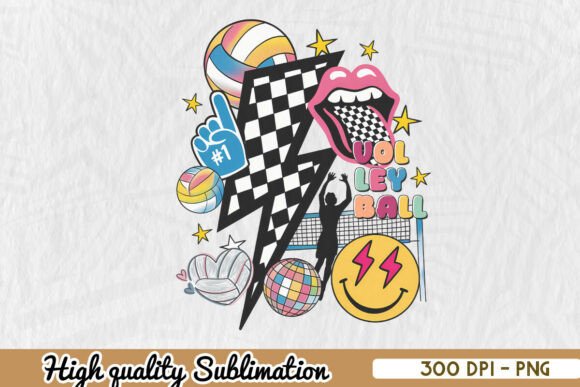
Retro Volleyball Collage PNG Review
As a designer who spends more time than I care to admit staring at stitch lines and fabric grain, I don’t just look at a design file; I look at how it will survive the hoop. When Retro Volleyball Collage PNG landed on my desk, my first instinct wasn’t to imagine it on a t-shirt immediately. It was to ask: does this hold up when translated from pixels to thread? The world of machine embroidery design is saturated with generic sports imagery, so finding something with genuine character requires a critical eye. This piece, categorized under Crafts and Graphics, promises a blend of nostalgia and versatility that appeals to both hobbyists and serious Etsy seller entrepreneurs looking for that next best-selling item.
First Impressions: Mood and Visual Personality
The immediate takeaway from Retro Volleyball Collage PNG is its distinct vintage aesthetic. In an era where minimalism often dominates, there is a hungry market for designs that feel lived-in and nostalgic. The collage format suggests a layering of elements—perhaps vintage typography, classic ball illustrations, or retro color palettes—that creates depth without requiring complex stitching techniques. For an embroidery artist, this visual complexity is a double-edged sword. It offers rich texture and interest, but it demands careful planning to ensure the final product doesn’t look muddy or cluttered.
The mood is undeniably fun and approachable. It screams summer camps, beach parties, and casual Fridays. This makes it an excellent candidate for custom apparel like sweatshirts or tote bags, where the goal is to convey personality rather than formal elegance. The layout feels balanced, which is crucial because if the design is too asymmetrical, it can become difficult to center in standard hoop sizes, leading to awkward placements on garments. Visually, it has a strong presence that would likely catch the eye in a crowded craft fair booth or an online storefront.
Real-World Application: From Screen to Stitch
Let’s talk about the practical side of using Retro Volleyball Collage PNG in a real project. Imagine you are preparing a batch of custom embroidered tote bags for a local volleyball club tournament. You want something that looks professional but also celebrates the spirit of the game. This design fits that niche perfectly. The collage style allows for a larger visual footprint, making it ideal for the front panel of a canvas bag or the back of a heavyweight sweatshirt.
However, not every application is created equal. While this works beautifully as a tote bag design, applying it to delicate items requires caution. For instance, using this on baby clothes might be tricky. The "collage" nature implies multiple graphic elements. If these elements rely on fine lines or tiny text, they may disappear once stitched, especially if you are working with a small hoop size. Embroidery reduces detail; it adds bulk. A design that looks crisp on a screen can become a dense, heavy patch on thin jersey knit, potentially causing the fabric to pucker or distort. Therefore, while it could work for a sturdy onesie, it is better suited for sturdier fabrics like cotton blends or denim.
I also see potential in this design for embroidered patches. The self-contained nature of a collage often translates well into patch formats, which can then be sewn onto caps, jackets, or backpacks. This expands the utility of the asset significantly. Instead of being limited to one type of garment, the design becomes a versatile design asset for a broader range of handmade product offerings.
Technical Considerations and Pitfalls
No review of an embroidery file is complete without addressing the technical realities. Before committing to a production run, you must consider the stitch density. Retro designs often feature bold fills and thick outlines. If the underlying vector or raster data isn't optimized for embroidery conversion, the resulting embroidery file might have excessive stitch counts, leading to long hooping times and increased thread consumption. High stitch density can also make the finished product stiff and uncomfortable to wear, particularly on custom apparel meant for active use.
Fabric choice is another critical variable. This design relies on contrast to define its shapes. On dark fabric, you will need a high-quality underlay and possibly a cut-away stabilizer to prevent the vibrant colors from bleeding through or the fabric from distorting. Conversely, on light fabrics, the retro colors might lose some of their punch if the thread selection isn't carefully matched. I always recommend testing your thread colors against the actual fabric swatch before starting. Digital screens lie; thread reflects light differently.
There are also specific areas where this design should be used carefully. Avoid placing it on curved surfaces like baseball caps unless you have extensive experience with cap hoops and tension adjustments. The collage elements may not follow the curve naturally, leading to puckering at the edges. Additionally, if the design includes tiny decorative accents or lettering, inspect them closely. Tiny details are the first casualties of machine embroidery. If the letters are thinner than 2mm, they may merge together during stitching, rendering the text illegible. Always check whether the design works for both personal and commercial projects by verifying the licensing terms, as this affects your ability to sell the finished item.
Practical Designer Notes for Success
- Test on Scrap Fabric: Never assume a design will behave as expected. Run a test stitch on the exact fabric you plan to use. This reveals issues with stabilizer choice, tension balance, and thread compatibility.
- Check Black and White Mockups: Convert the design to grayscale to evaluate contrast. If the elements blend together in black and white, they will likely lack definition in color, especially after the sheen of the thread catches the light.
- Review Stitch Density: Ensure the fill stitch areas aren't overly dense. Excessive density leads to needle breakage and poor fabric drape.
- Inspect Small Details: Zoom in on any satin stitch borders or fine lines. If they appear jagged or thin in the digital preview, they will likely fail in execution.
- Confirm Licensing: As a small shop product owner, you must know if you have the right to sell items made from this digital embroidery file. Ambiguity here can lead to legal headaches.
Final Verdict: Value and Versatility
Ultimately, Retro Volleyball Collage PNG offers a compelling option for designers looking to tap into the sports and nostalgia markets. Its strength lies in its broad appeal and adaptability across various embroidery projects. It is not a subtle, minimalist design, but rather one that makes a statement. This makes it perfect for holiday embroidery gifts, team merchandise, or boutique branding where visibility is key.
For the craft business owner, this design provides a solid foundation for creating cohesive collections. Pair it with matching printable mockup assets to showcase the design effectively online. The key to success, however, lies in the execution. By paying attention to fabric selection, stabilizer support, and stitch quality, you can transform this digital graphic into a tangible, high-value finished product that customers will love. It is a reliable, visually engaging asset that, when handled with professional care, can elevate your commercial embroidery offerings and drive engagement with your target audience.