Vintage Gramophone Embroidery Review
As a designer who spends more time staring at stitch lines and fabric grain than actual screens, I approach every new download with a mix of hope and skepticism. We have all been there: you see a beautiful graphic on a marketplace, click "buy," and then realize halfway through the hoop that the intricate details are going to turn into a muddy mess on cotton twill. That is why I take a hard look at assets before they ever touch my machine. Today, I am evaluating Vintage Gramophone with Record Player an, a design that promises a heavy dose of nostalgia and retro musical charm. It falls under the broader categories of Illustrations and Graphics, but for us, it needs to prove itself as a functional machine embroidery design.
First Impressions and Visual Personality
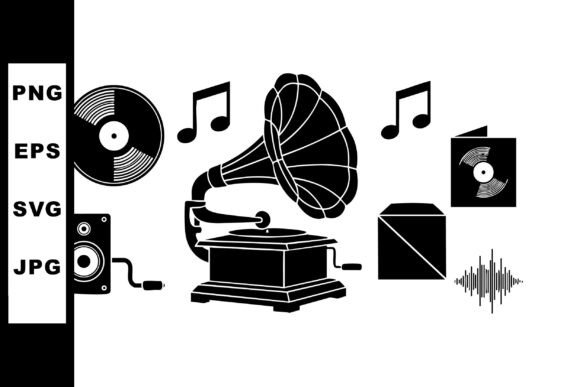
The moment I opened the file preview, the mood was instantly established. This isn’t just a generic music note; it is a full composition featuring a vintage gramophone, a vinyl record, floating music notes, a speaker element, soundwaves, and even a record sleeve. The black and white style suggests a classic, timeless aesthetic that appeals to anyone who loves mid-century vibes or analog warmth. For a creative entrepreneur or Etsy seller, this visual personality is gold. It screams "curated," "handmade," and "thoughtful."
From a layout perspective, the elements feel balanced. There is enough negative space around the central gramophone horn to allow for clean stitching without crowding the edges. However, the inclusion of multiple distinct elements—the soundwave, the sleeve, the notes—means this design has depth. It is not a flat icon; it has layers of visual interest. When I imagine this on a finished product, I see a story being told. It feels like something you would find in a grandmother’s attic or a cozy jazz café. That emotional connection is exactly what drives sales in the handmade market.
Real-World Application: Where Does This Design Shine?
I always ask myself: where does this design actually live? Based on the theme and complexity, Vintage Gramophone with Record Player an is perfectly suited for custom apparel and lifestyle goods. Let’s talk about a specific scenario. Imagine you are preparing inventory for the holiday season. You decide to create a line of personalized gifts for music lovers. This design fits beautifully on a high-quality canvas tote bag. The sturdy fabric can handle the weight of the fill stitches, and the retro theme complements the utilitarian nature of a tote.
But let’s go deeper. Consider a baby item, perhaps a burp cloth or a soft muslin blanket. The nostalgic theme works wonderfully for nursery decor or a "music lover" themed gift set. The gentle curves of the gramophone horn and the flowing soundwaves translate well to softer fabrics, provided the stitch density is managed correctly. Similarly, for craft fair products, this design would stand out on an embroidered patch attached to a denim jacket or a sweatshirt. The contrast between the rugged denim and the delicate, vintage illustration creates a compelling textural juxtaposition that customers love.
For small business owners looking to expand their catalog, this asset is versatile. It works as a digital embroidery file for print-on-demand mockups, allowing you to test marketing angles before committing to physical stock. It also serves as excellent design assets for boutique branding, perhaps stamped onto packaging tags or used as a watermark on your online store headers.
Technical Performance and Stitch Clarity
When reviewing any embroidery file, the devil is in the details. The description mentions music notes, speakers, and soundwaves. These are often tricky elements to stitch cleanly. If the running stitch for the notes is too long, it will snag. If the satin stitch on the record grooves is too dense, the fabric will pucker. In real-life embroidery situations, such as on thin fabric or stretchy knit materials, this design requires careful stabilizer selection. A cut-away stabilizer is likely necessary for garments like caps or hats, where the fabric needs permanent support to maintain its shape.
The black and white style implies a reliance on thread color contrast rather than complex shading. This is actually a strength. It means you can achieve a crisp, professional look using standard polyester threads. Whether you choose a stark black thread on white fabric or a cream thread on navy, the design should hold its integrity. However, designers must inspect the small details closely. The tiny lettering on the record sleeve, if present, needs to be large enough to be legible after stitching. If the details are too minute, they may disappear into the fabric texture, turning a sharp design into a blob.
Where to Use Caution
No design is perfect for every surface. There are specific scenarios where Vintage Gramophone with Record Player an might struggle. Avoid placing this on highly textured fabrics like bouclé or heavy waffle weaves unless you are prepared for the stitch path to become distorted. Thin fabrics, such as silk or lightweight rayon, require extra care; without proper backing, the tension could cause the fabric to pucker around the dense areas of the gramophone body.
Curved surfaces, like the front panel of a baseball cap, present another challenge. While the design is likely scalable, ensuring that the circular elements (the record) remain round on a curved surface requires precise digitizing. If the design is not optimized for curvature, the record might appear oval, breaking the illusion. Additionally, be mindful of small hoop sizes. Trying to cram all these elements—gramophone, notes, waves, sleeve—into a 4x4 inch hoop will result in overcrowding. Give the design room to breathe by using a larger hoop size, or consider cropping the composition to focus on the gramophone and record alone for smaller projects.
Practical Designer Notes for Success
Before you rush to produce a batch of finished products, follow these practical steps to ensure quality:
- Test on Scrap Fabric: Always run a test stitch on the exact fabric you plan to use. Check how the thread interacts with the weave.
- Check Thread Colors: Experiment with different thread colors. While black and white is classic, try off-whites, creams, or muted greys to enhance the vintage feel.
- Review Stitch Density: Look at the fill stitch areas. Are they too dense? Can they be loosened up to reduce bulk?
- Confirm Hoop Size: Ensure your hoop is large enough to accommodate the entire design without cutting off key elements.
- Inspect Small Details: Zoom in on the music notes and soundwaves. Are they clear? Do they need simplification?
- Mockup Testing: Create printable mockups to see how the design looks on various products before committing to production.
- Licensing Check: Confirm whether the license allows for commercial use if you intend to sell the finished items. This is crucial for Etsy sellers and small shop owners.
Final Verdict
Vintage Gramophone with Record Player an is a strong candidate for any designer looking to add a touch of retro elegance to their collection. It balances artistic flair with practical applicability. The mood it conveys—nostalgia, warmth, and musical appreciation—is universally appealing. Whether you are creating a personalized gift for a client, stocking a craft booth, or building a brand identity for your handmade business, this design offers solid value. It respects the medium of embroidery by relying on clear shapes and manageable details, making it a reliable choice for both hobbyists and professionals. Just remember to respect the fabric, prepare your stabilizers, and give the design the space it deserves. When executed well, the result is not just an embroidered image, but a statement piece that resonates with anyone who appreciates the art of analog sound.