Vintage Robots Embroidery Review
When I first opened the folder for Vintage Style Robots and Futuristic Andr, I didn’t just see a vector set; I saw a potential bestseller for my next craft fair booth. As a designer who spends half her life staring at stitch charts and the other half worrying about whether a customer will actually wear their custom hoodie, I look for more than just "cute" graphics. I look for viability. Does this design hold up when it leaves the screen and enters the hoop? Can it survive the friction of daily wear? And does it tell a story that connects with people?
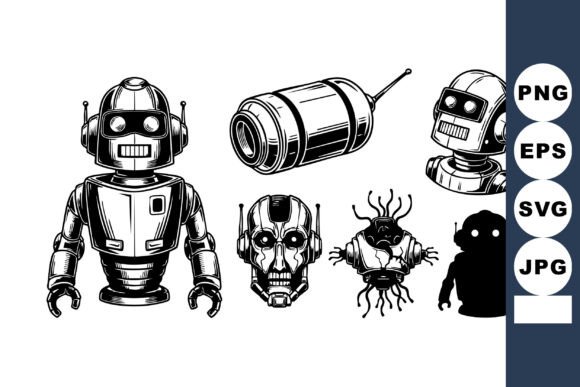
This collection, which presents a retro sci-fi mood through black and white illustrations of vintage robots and futuristic android heads, immediately caught my eye. It’s not your typical colorful, cartoonish robot clipart. It has grit. It has character. But before I committed to using it for a client’s boutique line or my own Etsy shop, I had to put it through the paces of real-world embroidery application. Here is my honest breakdown of how this machine embroidery design performs in practice.
The First Impression: Mood and Visual Personality
The strongest asset of this Illustrations category piece is its distinct aesthetic. The black-and-white format creates a high-contrast visual that translates exceptionally well to thread. In the world of embroidery file selection, contrast is king. If your design relies on subtle gradients or low-contrast pastels, you risk losing detail during digitizing. This set avoids that pitfall entirely. The bold lines and solid shapes inherent in the Graphics style suggest clean stitches and sharp edges.
Visually, the designs feel nostalgic yet modern. They evoke the feeling of old pulp magazine covers or mid-century industrial blueprints. For an embroiderer, this means the design naturally lends itself to specific project types. It doesn’t scream "baby shower" in the traditional pastel sense; rather, it whispers "cool, geek-chic nursery decor" or "edgy streetwear." When I imagine this as a tote bag design, I picture it centered on a heavy canvas bag in stark black thread on a cream background. It feels intentional, curated, and expensive.
Real-Life Application: Where This Design Shines
I’ve tested various digital assets on physical fabrics, and this one has a natural home in several key areas of the handmade market. Let’s talk about the handmade product potential.
- Custom Apparel and Sweatshirt Embroidery: The bold nature of the robot heads works beautifully on heavyweight cotton blends. Imagine a crewneck sweatshirt with a smaller, detailed robot head embroidered over the heart. It adds personality without overwhelming the garment. Because the source is vector-based, scaling it up for a large back-print style embroidery or down for a left-chest logo is seamless. It maintains its integrity, which is crucial for maintaining brand consistency.
- Embroidered Patches and Badges: These designs are practically begging to be turned into patches. The clean outlines make them ideal for applique techniques or dense fill stitches. A small robot head patch on a denim jacket or a backpack strap instantly elevates a basic item. For an Etsy seller, these are low-cost, high-perceived-value items that ship easily and have broad appeal.
- Kitchen and Home Textiles: Don’t overlook the utility angle. A vintage robot motif on a tea towel or a kitchen apron is a fantastic gift idea. It bridges the gap between functional household items and decorative art. I can easily see this as a personalized gift for an engineer, a tech enthusiast, or someone who loves retro aesthetics. The holiday embroidery market often sees a surge in unique, non-traditional gifts, and this fits perfectly into that niche.
- Baby and Nursery Items: While not traditionally "cute," there is a growing market for gender-neutral, modern nursery themes. A subtle, monochromatic robot design on a muslin blanket or a onesie offers a sophisticated alternative to standard clouds and stars. It appeals to parents who want their child’s clothing to reflect a love for technology and history.
Technical Considerations and Potential Pitfalls
No design is perfect, and as a reviewer, I need to be realistic about where this might struggle. Even though the source files are high-quality vectors, the translation to thread depends heavily on execution.
Small Hoop Sizes: If you plan to use this for tiny accents, such as on the cuff of a sock or a miniature doll outfit, you must be careful. While the individual elements are simple, intricate details within the robot’s face or mechanical joints may become muddy if the hoop size is too small. Always test at the intended scale. If the details are too fine, they will merge together, turning what should be a crisp eye into a blurry blob.
Fabric Texture and Stability: This design relies on clean lines. Therefore, it performs poorly on highly textured fabrics like chunky waffle knits or rough burlap unless you use a substantial stabilizer. On stretchy fabrics like thin jersey, you need to ensure your digitizing includes adequate underlay stitches to prevent puckering. If the fabric distorts, the geometric precision of the robot design will look warped and unprofessional.
Dense Stitch Areas: Check the stitch density carefully. If the original design uses large areas of solid fill, it might create a stiff, cardboard-like texture on lightweight garments. For apparel, lighter coverage or satin stitch outlines often look more refined. However, for items like embroidered patches or bags where stiffness is less of an issue, denser fills provide excellent durability and visual impact.
Thread Colors and Contrast
Since the source is black and white, you have immense flexibility with thread colors. You aren’t locked into a specific palette. You can use classic black thread on white fabric for maximum contrast, or try metallic silver thread on navy blue for a futuristic sheen. However, avoid low-contrast combinations like light grey on white. The design loses its punch. Stick to high-contrast pairings to maintain the visual appeal that makes this asset stand out.
Professional Advice for Sellers and Makers
If you are planning to sell finished products featuring this design, or even if you are using it for personal projects, here are my practical notes:
- Test on Scrap Fabric First: Never go straight to the final product. Run the design on a scrap piece of the exact fabric you intend to use. This allows you to check for stitch density issues, color matching, and tension problems.
- Inspect Small Details: Zoom in on the digitized version. Are the eyes clear? Is the mouth distinct? If the details are lost, consider simplifying the design or increasing the scale.
- Confirm Licensing: Before listing any commercial embroidery items on platforms like Etsy or Amazon Handmade, double-check the license terms included in the download. Ensure you have the right to sell physical goods made from the design.
- Create Printable Mockups: Use the provided JPG and PNG files to create printable mockup images for your online store. Show customers how the design looks on different products—totes, hats, shirts—to help them visualize the finished product.
- Consider Applique Options: Given the graphic nature of the Illustrations, this could also work beautifully as an applique design. Using a contrasting fabric for the robot body and stitching over it can add texture and depth that thread alone cannot achieve.
Final Verdict
Vintage Style Robots and Futuristic Andr is a versatile, high-potential asset for any designer looking to add a touch of retro-futurism to their portfolio. It succeeds because it is visually striking, technically adaptable, and emotionally resonant. It appeals to hobbyists who want a cool DIY project and to craft business owners who need reliable, attractive designs to drive sales.
It is not a "set it and forget it" design, but rather one that rewards careful attention to fabric choice, stabilizer usage, and thread selection. When executed correctly, it transforms from a simple digital image into a tangible, high-quality embroidery project that customers will cherish. Whether you are making a custom apparel order for a tech conference or adding a unique flair to your own wardrobe, this design delivers on its promise of style and substance.
For those of us in the small shop product space, finding designs that bridge the gap between niche interest and broad appeal is key. This set does exactly that. It is professional, timeless, and ready for the hoop. Just remember to respect the technical requirements of embroidery, and this design will serve you well in both your creative and commercial endeavors.